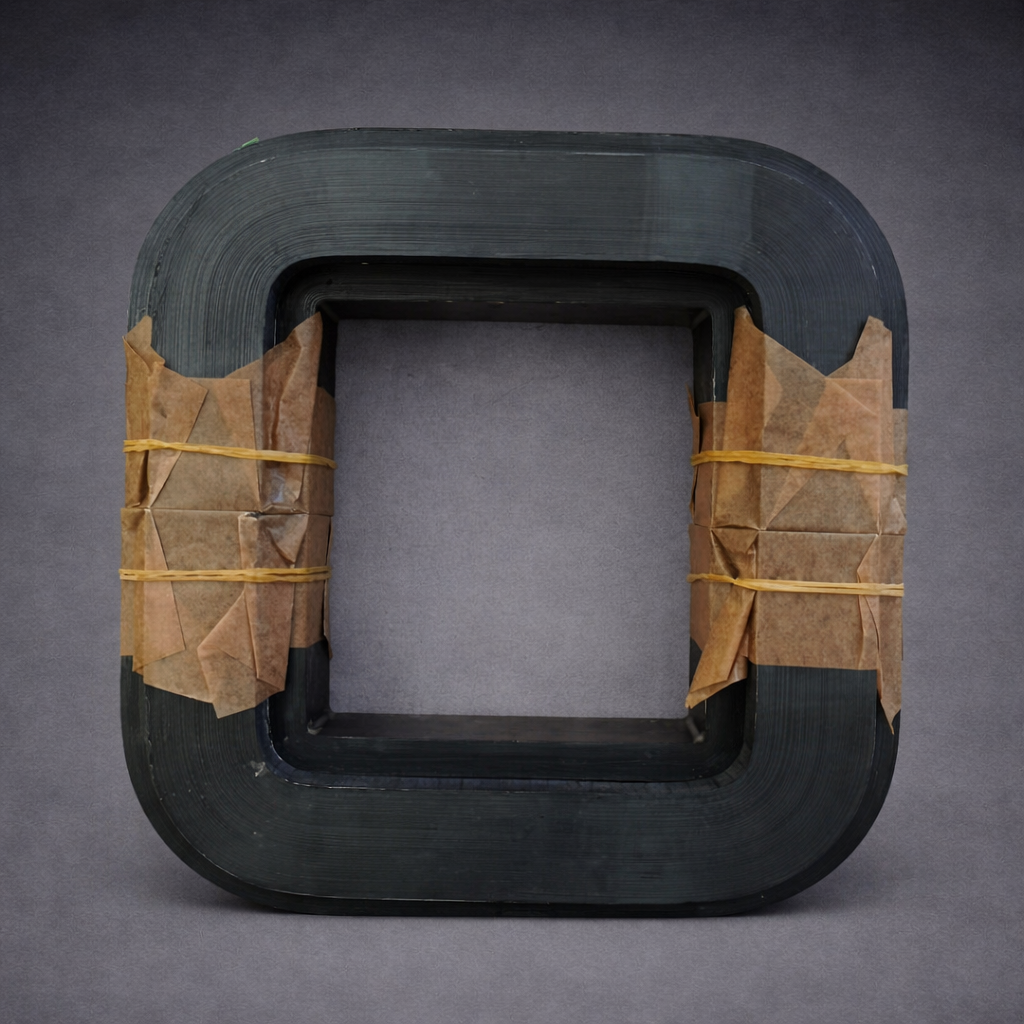
The images shown on this page are intended solely to illustrate typical structures and common forms of silicon steel cores. Products are available in various structural forms such as toroidal, E-type, C-type, rectangular, and split cores.
Specific material grades, structural designs, and performance parameters will be confirmed according to customer project requirements and technical documentation.
Silicon Steel Cores
Application and Material Characteristics
Silicon steel cores are widely used magnetic materials in power equipment and electronic devices, primarily serving functions such as energy conversion, electromagnetic induction, and current measurement.
These products typically operate under power-frequency and medium-to-low frequency conditions and have defined requirements for magnetic stability, loss control, and structural consistency.
In practical applications, silicon steel cores are commonly used in transformers, current transformers, reactors, and related electromagnetic components, and are suitable for applications requiring mature manufacturing processes and reliable performance. Depending on equipment structure and operating conditions, products can be matched in terms of material grade, lamination method, and structural form to meet different system design and operational requirements.
Typical Parameters
| Parameter | Value |
|---|---|
| Saturation Induction (Bs) | 1.56 T |
| Curie Temperature | 410 °C |
| Maximum Permeability (μmax) | >20×10⁴ |
| Coercivity (Hc) | <2.4 A/m |
| Remanence (Br) | 1.0 T |
| Core Loss (50 Hz, 1.4 T) | <0.13 W/kg |
**Disclaimer
The above product images, materials, and parameters are provided as typical application examples of silicon steel cores, intended to illustrate common usage scenarios and structural forms.
Actual material selection, structural design, and performance requirements shall be subject to customer-provided drawings and technical specifications.