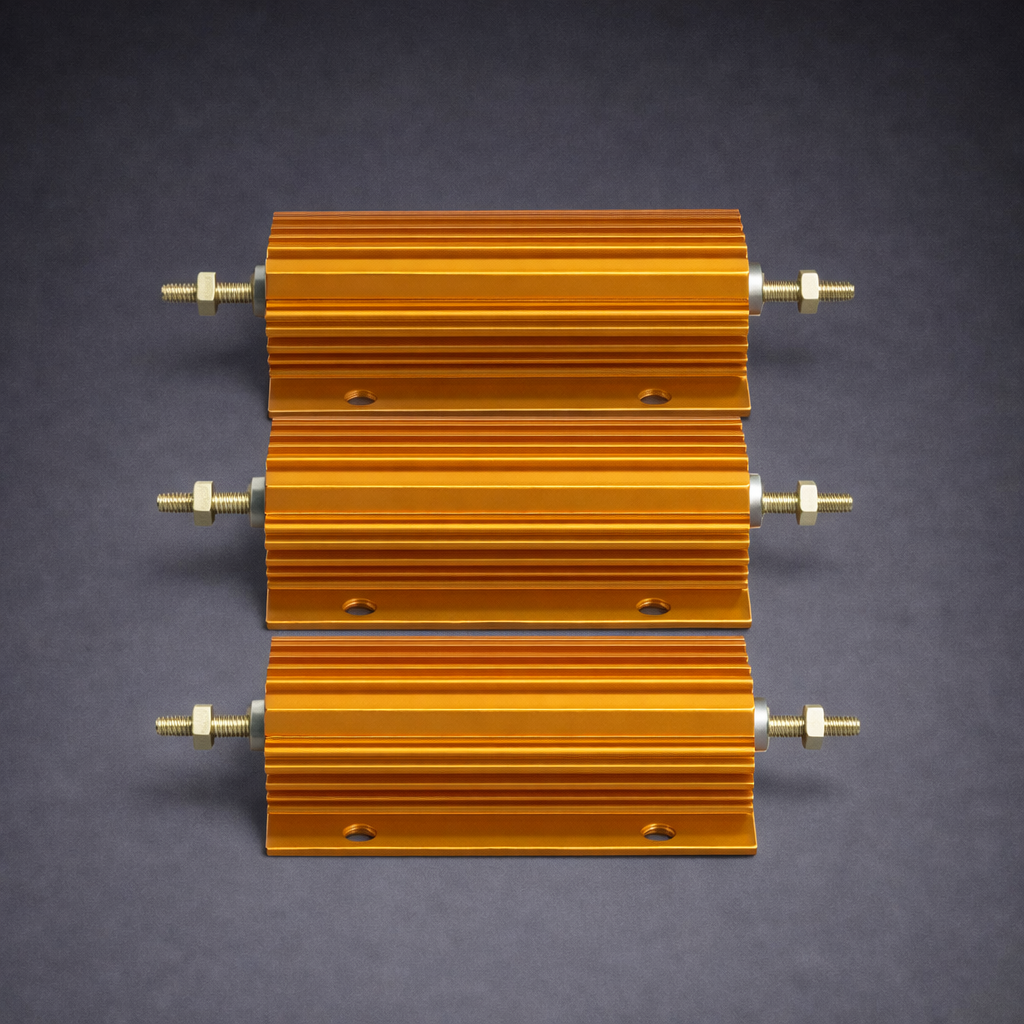
The images shown on this page are intended solely to illustrate typical resistor structures and common product types.
Specific resistance ranges, power ratings, structural designs, and technical parameters will be confirmed according to customer application requirements and relevant technical documentation.
Resistors
Application and Structural Characteristics
Resistors are fundamental electronic components used in electrical circuits to perform functions such as current limiting, energy dissipation, voltage division, and signal regulation.
They are widely applied in power equipment, industrial control systems, and related electronic applications. These components typically serve as functional elements within a system and require defined resistance accuracy, power handling capability, and long-term operational stability.
In practical applications, resistors are selected based on circuit design and operating conditions to match specific resistance ranges, power ratings, and thermal requirements.
Typical Parameters
| Parameter | Value |
|---|---|
| Resistance Value | 0.1 Ω – 1 MΩ |
| Power Rating | 10 W – 2000 W |
| Voltage Rating | Up to 5 kV |
| Tolerance | ±1% – ±10% |
| Temperature Coefficient | 50 – 300 ppm/°C |
| Operating Temperature | -55 °C – +250 °C |
**Disclaimer
The above product images, parameters, and application descriptions are provided as typical application examples of resistors, intended to illustrate common usage scenarios and selection references.
Actual product models, parameter configurations, and performance requirements shall be subject to customer-provided technical specifications and selection requirements.