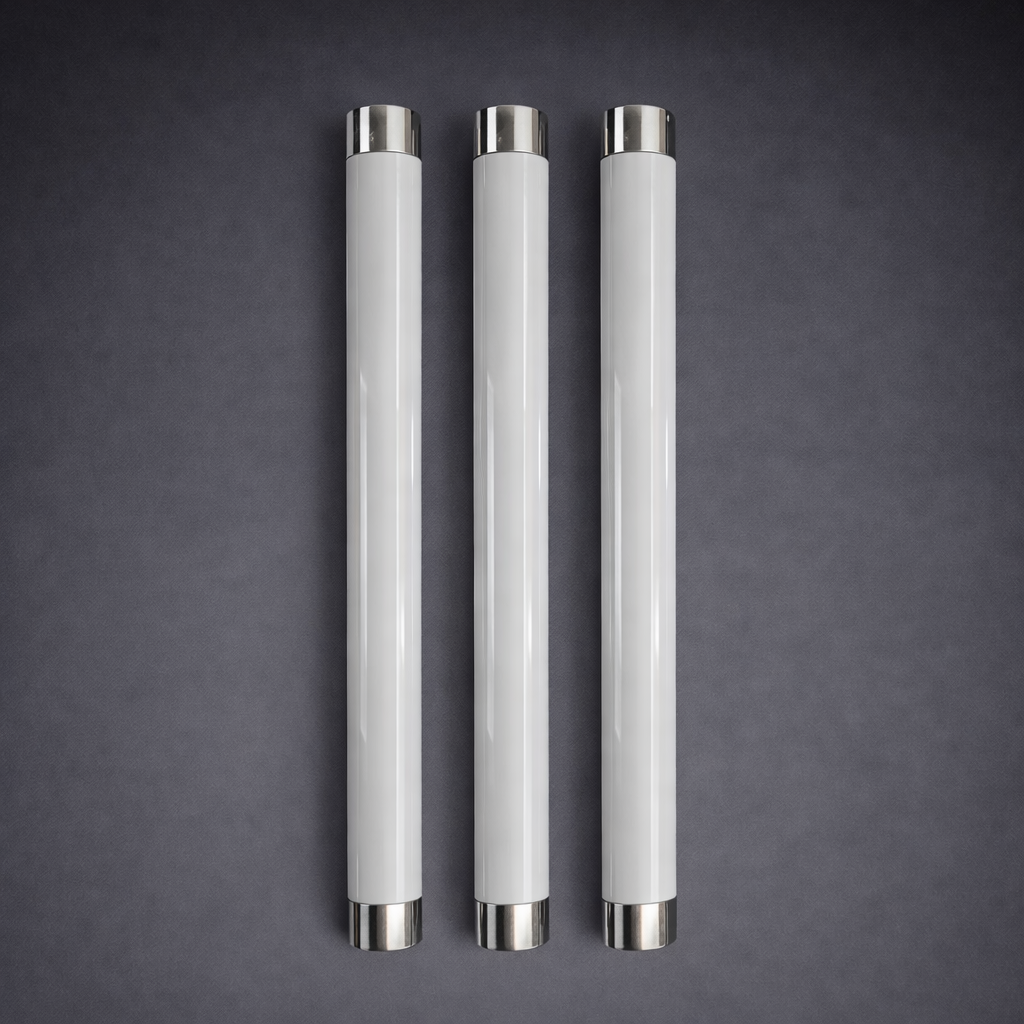
The images shown on this page are intended solely to illustrate typical fuse structures and common product types.
Specific voltage ratings, rated currents, breaking capacities, and related technical parameters will be confirmed according to actual application requirements and technical documentation.
Fuses
Application and Structural Characteristics
Fuses are electrical components used for overcurrent protection in circuits and equipment. Under abnormal current or fault conditions, the fuse element melts rapidly to interrupt the circuit, preventing equipment damage and ensuring system safety.
These products are widely applied in power systems, industrial equipment, and related electrical installations, forming an essential part of electrical protection systems.
In practical applications, fuses are selected based on rated voltage, rated current, and protection requirements to ensure reliable operation under fault conditions without affecting normal system performance.
Typical Parameters
| Parameter | Value |
|---|---|
| Rated Current | 0.5 A – 630 A |
| Rated Voltage | Up to 36 kV |
| Breaking Capacity | Up to 50 kA |
| Operating Class | gG / aM / gR / Custom |
| Response Type | Fast / Time-delay |
| Standard Compliance | IEC / GB / Custom |
**Disclaimer
The above product images, parameters, and application descriptions are provided as typical application examples of fuses, intended to illustrate common usage scenarios and selection references.
Actual product models, parameter configurations, and performance requirements shall be subject to customer-provided technical specifications and selection requirements.